TL;DR:
- Anonymous peer support improves recovery outcomes, including higher abstinence and retention rates.
- It reduces stigma, encourages honest sharing, and allows flexible, private access.
- Combining anonymous support with professional care offers the most effective pathway to lasting recovery.
Peer recovery programs with anonymous sponsorship consistently outperform many traditional support methods, yet countless people still hesitate to try them. Fear, misunderstanding, and stigma get in the way. The truth is, peer recovery support is linked to improved outcomes compared to approaches without peer connection. If you've been wondering whether anonymous support is right for you, this article will walk you through what it is, what the evidence says, its real benefits, and the honest risks. You deserve clear answers before making this important choice.
Table of Contents
- What is anonymous support in recovery?
- Evidence behind anonymous sponsorship programs
- The unique benefits of choosing anonymity
- Risks and misconceptions about anonymous support
- Why anonymous support works and where it falls short
- Connect with anonymous support resources today
- Frequently asked questions
Key Takeaways
| Point | Details |
|---|---|
| Data-backed recovery gains | Anonymous peer support leads to higher engagement and better abstinence rates than many traditional methods. |
| Reduces stigma and boosts openness | Anonymity makes it easier for people to share honestly and connect meaningfully during recovery. |
| Know the risks | Overreliance and lack of professional advice are potential pitfalls of anonymous support, so balance is key. |
| Flexible, confidential help | You can access anonymous support programs from anywhere, providing practical and emotional safety. |
| Best results combine methods | Pairing anonymous support with professional care supports lasting recovery and overall well-being. |
What is anonymous support in recovery?
Anonymous support in recovery means getting help from a sponsor or peer without revealing your full identity. Your name, your background, your past, none of it needs to be shared unless you choose to. A sponsor is someone who has walked a similar path and now guides others through the process of staying sober and building a healthier life.
These programs operate under a simple but powerful principle: when you feel safe, you open up. And when you open up, real healing can begin. Anonymous support systems are built around this idea, creating space where honesty isn't punished.
Here's how anonymous sponsorship typically works:
- You connect with a sponsor who has experience in your chosen recovery program, such as AA, NA, SMART Recovery, or Dharma-based recovery.
- Meetings and check-ins happen regularly, either in person, by phone, or online.
- Confidentiality is protected at every step. What you share stays within the relationship.
- You set the pace. There's no pressure to share more than you're ready to.
Anonymity also plays a big role in reducing stigma. Addiction carries a heavy social burden. Many people fear being judged by coworkers, family members, or their community. When your identity is protected, that fear shrinks. You can focus on recovery instead of managing how others see you.
"Anonymous peer support enables vulnerability in stigma-heavy contexts, making it possible for individuals to share honestly without fear of social consequences." Peer Recovery Support Services
This kind of safety is not a small thing. For many people, it's the difference between staying silent and asking for help. Anonymous support removes a major barrier that keeps people stuck.
The structure is flexible, too. Some programs are spiritually oriented, like AA or NA. Others, like SMART Recovery, take a science-based approach. Dharma-based programs draw from Buddhist principles. You get to choose what fits your values and your life. That flexibility, combined with confidentiality, makes anonymous sponsorship one of the most accessible forms of recovery support available today.
Evidence behind anonymous sponsorship programs
Now that you understand what anonymous support offers, let's look at the evidence showing its impact.
Research consistently supports the value of anonymous peer sponsorship. Studies show that people who engage with peer recovery support report better outcomes across multiple measures, including how long they stay in treatment, how often they relapse, and how connected they feel to their recovery community.
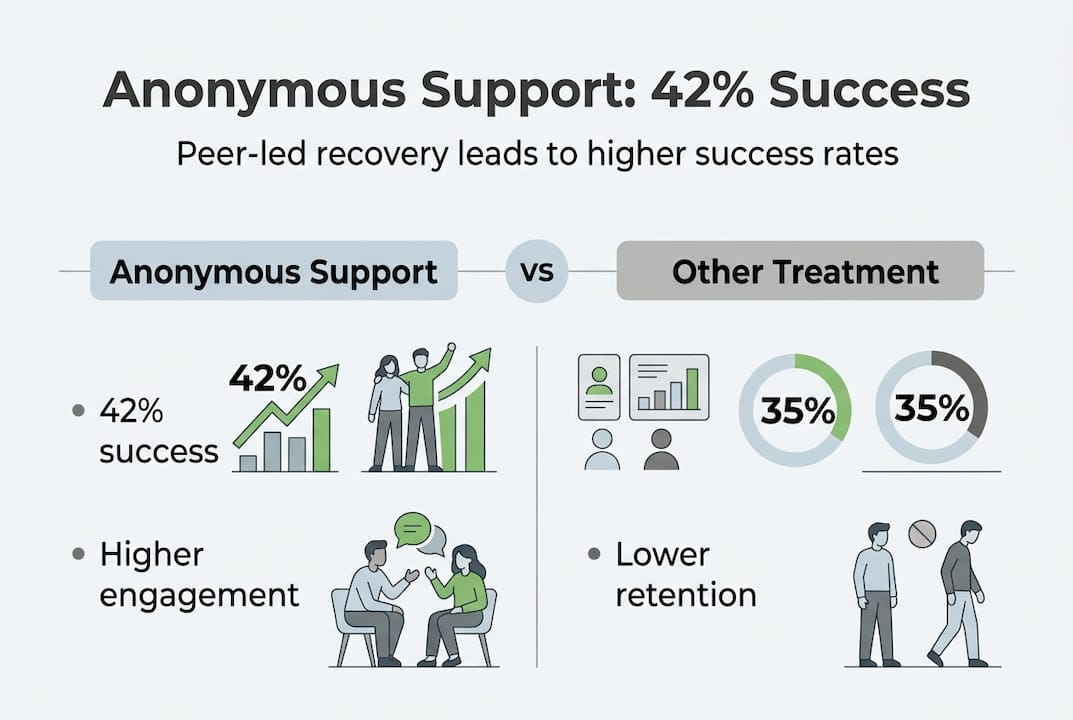
| Outcome | Anonymous peer support | Other treatment forms |
|---|---|---|
| Abstinence at 1 year | 42% | 35% |
| Treatment retention | Higher | Moderate |
| Community engagement | Strong | Variable |
| Long-term recovery rates | Improved | Mixed |
Those numbers matter. A 42% abstinence rate at one year in 12-step programs versus 35% in other treatment forms is a meaningful difference. That's not a small gap when you're talking about someone's life.
Key findings from the research include:
- Anonymous sponsorship shows higher treatment engagement, retention, and abstinence outcomes compared to non-peer approaches.
- Peer sponsors provide accountability that professional relationships sometimes lack.
- The shared lived experience between sponsor and sponsee creates a unique kind of trust.
- People in anonymous programs report feeling less alone, which directly supports motivation to stay sober.
One reason anonymous programs perform well is that sponsors have been through it themselves. They're not reading from a textbook. They know what cravings feel like at 2 a.m. They know how hard it is to call someone when you feel ashamed. That lived experience creates credibility that no credential can fully replace.
It's also worth noting that anonymous support works well alongside professional treatment. It doesn't have to replace therapy or medication-assisted treatment. Many people use both. The combination tends to produce the strongest results because you get clinical expertise and peer connection at the same time.
The evidence is clear. Anonymous sponsorship is not just a feel-good option. It's a proven, effective tool for recovery.
The unique benefits of choosing anonymity
With the data established, let's examine what truly differentiates anonymous support on a personal level.
Anonymity does something that most other recovery tools can't: it removes the performance pressure. When no one knows who you are, you stop worrying about how you look. You stop managing your image. You just focus on getting better.
Here are the key personal benefits of choosing anonymous support:
- Reduced self-judgment. When your identity is protected, you're less likely to be harsh on yourself for struggling. You can admit weakness without it defining your public reputation.
- More honest sharing. Anonymity enables vulnerability in stigma-heavy contexts, which means you're more likely to tell the truth about where you are in your recovery.
- Privacy protection. Your employer, your neighbors, your family members don't need to know you're in a program unless you choose to tell them.
- Access from anywhere. Online anonymous sponsorship means you can connect with support no matter where you live, even in rural areas or places with limited local resources.
- Support on your schedule. Many anonymous programs offer flexible timing, so you can reach out when you actually need help, not just during office hours.
These benefits aren't abstract. They translate into real-world outcomes. When people feel safe, they engage more. When they engage more, they recover better. Anonymity in recovery is not just a privacy feature. It's a therapeutic tool.
Pro Tip: When searching for a sponsor in an anonymous program, look for someone with at least one year of continuous sobriety in your chosen program. Ask them directly how they handle confidentiality. A good sponsor will be clear, consistent, and comfortable discussing boundaries from the start.
Anonymity also helps people who have tried recovery before and felt embarrassed about relapsing. Starting fresh without the weight of past judgment is genuinely powerful. It gives you permission to try again without shame.

Risks and misconceptions about anonymous support
While anonymous support offers unique advantages, it's important to understand its potential challenges and how to address them.
No support model is perfect. Anonymous sponsorship has real limitations, and being aware of them helps you use it wisely.
Common concerns include:
- Overdependence on a sponsor. Some people lean too heavily on one person, which can create an unhealthy dynamic. Overdependence and preference for professional options are cited risks in peer recovery research.
- Lack of professional oversight. Sponsors are not therapists. They can't diagnose mental health conditions or manage medication.
- Spiritual orientation mismatch. Some programs have a spiritual focus that doesn't fit everyone. This can make certain people feel excluded.
- Inconsistent quality. Not all sponsors are equally skilled or emotionally available.
| Concern | Reality | Solution |
|---|---|---|
| Overdependence | Real risk with any peer relationship | Set clear boundaries early |
| No clinical oversight | Sponsors aren't professionals | Combine with therapy or counseling |
| Spiritual focus | Not all programs are spiritual | Choose SMART Recovery or Dharma-based options |
| Sponsor quality varies | True across all programs | Use verified platforms with reviews |
The biggest misconception is that anonymous support is somehow less effective because it's not clinical. The research doesn't support that view. What matters is engagement, consistency, and fit. Anonymous programs deliver all three when used thoughtfully.
Another common myth is that these programs only work for people with religious beliefs. That's simply not true. SMART Recovery and other secular options provide the same peer connection and accountability without any spiritual component.
The smart approach is to treat anonymous sponsorship as one layer of your recovery, not the only layer. Pair it with professional support when you can. Use it to fill the gaps that clinical settings can't reach, like late-night cravings, daily check-ins, and the kind of honest conversation that only someone who's been there can offer.
Why anonymous support works and where it falls short
Here's an opinion that most recovery guides won't say out loud: anonymous support works best when you stop treating it as a backup plan and start treating it as a primary tool. Most people come to it after everything else has failed. That delay costs time and sometimes costs lives.
The real power of anonymous sponsorship is peer connection. Not the program. Not the steps. The relationship between two people who share an experience. That connection is what creates accountability, hope, and the willingness to keep going.
But anonymous support alone is not enough for everyone. If you're dealing with co-occurring mental health conditions, trauma, or complex medical needs, peer support must be paired with professional care. Pretending otherwise does a disservice to the people who need more structured help.
The most effective recovery journeys we've seen combine both. Explore recovery mentorship options that let you layer peer support with clinical guidance. That combination, not one or the other, is where lasting recovery lives.
Connect with anonymous support resources today
You've now seen the evidence, understood the benefits, and considered the risks. The next step is yours to take.
Vybez Sponsor Me makes it easy to connect with verified sponsors across anonymous recovery programs including AA, NA, SMART Recovery, and Dharma-based options. Every sponsor profile is verified, and you can read real reviews before you connect. Your privacy is protected at every step. Whether you're just starting out or looking for a fresh connection, you'll find a trusted community ready to support you. Start your journey today and take that first step toward a stronger, healthier life. You don't have to do this alone.
Frequently asked questions
Does anonymous support really improve recovery outcomes?
Yes, systematic reviews show anonymous peer support increases treatment engagement and abstinence rates compared to other approaches. 42% abstinence at one year in 12-step programs versus 35% in other treatment forms demonstrates a clear advantage.
What risks come with anonymous sponsorship?
Risks include potential overdependence and lack of professional oversight, which can be managed by combining peer support with clinical guidance. Overdependence and preference for professional options are cited in peer recovery research as areas to watch.
How does anonymity help overcome stigma in recovery?
Anonymity creates a safe environment for honest sharing and reduces the fear of judgment, especially in communities with heavy stigma. Anonymous support excels in stigma-heavy contexts, enabling the kind of vulnerability that drives real progress.
Is anonymous support suitable for everyone?
Anonymous support can be highly effective, but some may prefer more professional or structured recovery programs based on their needs. Preference for professional or non-spiritual options is common and completely valid, which is why choosing the right program fit matters.