
TL;DR:
- Choosing a sponsor with honesty, active recovery, and clear boundaries improves recovery outcomes.
- Different sponsor types offer varied support, from traditional long-term to peer or temporary models.
- Regularly assessing and adjusting sponsorship relationships ensures they meet evolving recovery needs.
Choosing the right sponsor can shape how far you go in recovery. It sounds simple, but with so many options and so much at stake, the decision can feel overwhelming. Research shows that 12-step involvement with sponsorship leads to measurably better abstinence rates and recovery outcomes. That's not a small thing. This article gives you a clear, structured checklist to evaluate your options, compare sponsor types, and make a confident choice. You deserve support that actually fits your life and your goals.
Table of Contents
- Core criteria for sponsor selection
- Sponsor types: Options, pros, and cons
- Side-by-side sponsor comparison
- How to choose: Making the decision with confidence
- A fresh perspective: Why sponsor fit matters more than program
- Take the next step with guided sponsor selection
- Frequently asked questions
Key Takeaways
| Point | Details |
|---|---|
| Criteria matter most | Choosing a sponsor based on solid criteria increases your chances of successful recovery. |
| Sponsor types vary | Traditional, temporary, and peer options each offer unique strengths and trade-offs. |
| Fit is personal | The best sponsor for you aligns with your current needs, boundaries, and growth. |
| Checklist guides action | Using a step-by-step checklist simplifies the sponsor selection and review process. |
Core criteria for sponsor selection
Now that we've underscored the stakes, let's break down what really matters when evaluating a potential sponsor.
Not every person who offers to sponsor you is the right fit. The qualities that make a sponsor genuinely helpful go beyond good intentions. You want someone who is honest, actively engaged in their own recovery, and consistently available when you need them. These aren't just nice-to-haves. They are the foundation of a relationship that can hold you steady during difficult moments.
Here are the core traits to look for:
- Honesty: They tell you what you need to hear, not just what feels comfortable.
- Active recovery participation: They attend meetings, work their own program, and model the behavior they encourage in you.
- Accessibility: They respond to calls or messages in a reasonable time frame.
- Clear boundaries: They maintain a respectful, professional relationship without crossing personal lines.
- Lived experience: They've faced challenges similar to yours and have navigated them successfully.
- Commitment: They're willing to invest time and energy into your growth, not just show up occasionally.
Red flags to watch for include sponsors who seem controlling, who blur personal boundaries, or who make you feel judged rather than supported. A sponsor's role is to guide, not to manage your life.
Pro Tip: Before committing to a sponsor, have at least two or three conversations. Ask them directly how they handle conflict, what their availability looks like, and what they expect from you.
Empirical data confirms that active sponsorship engagement is linked to stronger abstinence rates and better long-term recovery outcomes. That data matters when you're making this choice. Use our sponsor selection checklist to score potential sponsors against these criteria before you decide.
Time in recovery also matters. A sponsor with at least one to two years of sustained sobriety typically has enough experience to offer meaningful guidance. They've moved through early challenges and can speak from a grounded place.
Sponsor types: Options, pros, and cons
Once you know the essential criteria, it's time to review the practical sponsor options available today.

There are several types of sponsors you might encounter, and each comes with its own strengths and limitations. Understanding the differences helps you set realistic expectations from the start.
Traditional long-term sponsor This is the most common model, especially in AA and NA. A traditional sponsor has significant time in recovery and commits to an ongoing, structured relationship with you.
Pros: Deep accountability, consistent guidance, strong personal bond over time. Cons: Can sometimes create a power imbalance, may not suit everyone's communication style.
Temporary sponsor A temporary sponsor is a short-term option, often used when someone is new to a program and needs immediate support while finding a permanent sponsor.
Pros: Accessible quickly, low-pressure commitment, useful as a bridge. Cons: Limited depth of relationship, may not offer the same level of accountability.
Peer or group support model Some people find that peer support alternatives offer similar benefits to traditional sponsorship, though they may lack the individual accountability a one-on-one sponsor provides. This model is common in SMART Recovery and Dharma-based programs.
Pros: Flexible, community-centered, less risk of power imbalance. Cons: Less personalized, accountability can be diffuse across the group.
Pro Tip: Consider your communication style and personal history when choosing a sponsor type. If you've had difficult experiences with authority figures, a peer model might feel safer to start.
Cultural background, gender identity, and shared life experience also play a real role in how well a sponsor relationship works. You're more likely to open up honestly with someone who understands your context. Explore the discussion of sponsor types on our platform to find options that reflect your background and values.
Side-by-side sponsor comparison
With a basic understanding of sponsor types, a side-by-side look helps clarify overlaps and crucial differences.
No single sponsor type checks every box for every person. The table below maps the three main types against the core selection criteria so you can see at a glance where each option tends to shine or fall short.
| Criteria | Traditional sponsor | Temporary sponsor | Peer or group model |
|---|---|---|---|
| Accountability | High | Moderate | Variable |
| Availability | Moderate to high | High (short-term) | High |
| Lived experience | Strong | Moderate | Varies by member |
| Boundary clarity | Depends on individual | Usually clear | Generally clear |
| Flexibility | Lower | Higher | Highest |
| Long-term structure | Strong | Weak | Moderate |
| Risk of power imbalance | Higher | Low | Low |
Looking at this table, you can see that traditional sponsors offer the most structure and accountability but carry a higher risk of power imbalance if the relationship isn't carefully managed. Research confirms that poor sponsor selection risks harm when accountability and social support aren't balanced thoughtfully.
Temporary sponsors are great for getting started but aren't built for the long haul. Peer and group models offer flexibility and safety but may not provide the focused, personal guidance some people need.
The key takeaway here is alignment. What works brilliantly for one person may feel limiting or unsafe for another. Your recovery is personal, and your sponsor choice should reflect that. Use the platform to compare sponsor options and see verified profiles that match your specific criteria.
Think about what stage of recovery you're in, too. Early recovery often calls for more structure and frequent contact. Later stages may benefit from a more flexible, peer-oriented model.
How to choose: Making the decision with confidence
Armed with comparison insights, here's how you can actively put the checklist to work to make the best choice.
Having a checklist is only useful if you know how to apply it. Here's a step-by-step process to move from uncertainty to a confident decision.
- Assess your needs. Write down what you're looking for: availability, shared experience, communication style, program type. Be honest about what you need, not just what seems easiest.
- Shortlist candidates. Identify two to three potential sponsors from your program, community, or platform. Don't settle on the first person who offers.
- Have initial conversations. Ask each candidate about their recovery journey, their approach to sponsorship, and how they handle difficult situations. Listen for honesty and openness.
- Set clear expectations. Before committing, discuss how often you'll connect, what communication looks like, and what boundaries matter to both of you.
- Review regularly. Check in with yourself every few months. Is the relationship still working? Are your needs being met? Growth in recovery means your needs will shift.
"Careful selection and ongoing assessment are essential because sponsorship carries real risks of hierarchy and power imbalance if left unexamined." This insight from ongoing sponsorship critique is a reminder that the relationship deserves regular attention, not just a one-time decision.
If a sponsorship isn't working, it's okay to step back. You can have a direct, respectful conversation about changing the relationship or finding someone new. Your recovery comes first. Use the sponsor evaluation guidelines to help you frame those conversations with clarity and confidence.
Remember: you have agency here. Consent and comfort matter in this relationship just as much as structure and accountability.
A fresh perspective: Why sponsor fit matters more than program
Here's something most articles won't tell you. The program you choose matters far less than the quality of the relationship you build within it. A traditional AA sponsor who truly listens and respects your boundaries will do more for your recovery than a technically perfect match who makes you feel small.
Checklists are tools, not rules. They help you organize your thinking, but they can't replace your gut instinct about whether someone feels safe and trustworthy. Use the checklist to filter options, then trust your experience in those early conversations.
Your needs will also change as you grow. What you needed at 30 days sober is different from what you need at two years. Poor sponsor selection can cause real harm, especially when power imbalances go unaddressed. Revisiting your sponsor relationship isn't a sign of failure. It's a sign of healthy self-awareness.
It's completely okay to change sponsors, try a peer model, or blend different types of support as your recovery evolves. The goal is lasting wellness, not loyalty to a structure that no longer serves you.
Take the next step with guided sponsor selection
Whether you're starting this process for the first time or considering a change, having the right tools makes sponsor selection far less overwhelming.
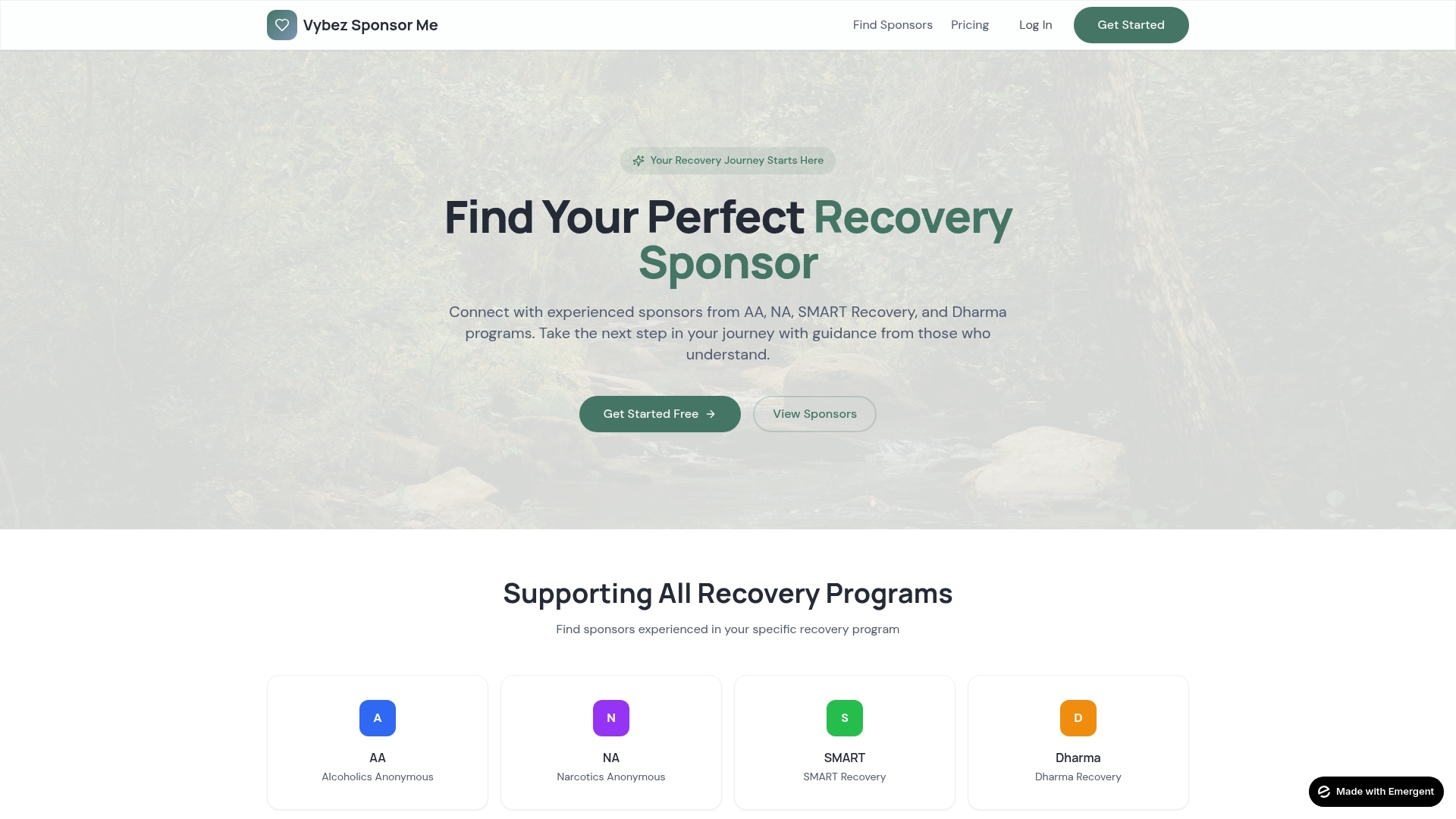
Vybez Sponsor Me gives you access to a complete sponsor checklist, verified sponsor profiles, and real community reviews so you can compare options with confidence. Our platform supports connections across AA, NA, SMART Recovery, and Dharma-based programs, so you can find someone who truly fits your path. You don't have to figure this out alone. Start your journey today and let us help you find the support that lasts.
Frequently asked questions
What is the most important quality in a sponsor?
Honesty and commitment to recovery are the most critical traits. Active engagement and honesty are consistently linked to better recovery outcomes in the research.
Can you change sponsors if it's not a good fit?
Yes, and it's encouraged. If your needs aren't being met or the relationship doesn't feel safe, adjusting your sponsorship is a healthy and recommended step.
What alternatives exist if I don't want a traditional sponsor?
Peer mentoring, group support, and non-12-step recovery networks are all valid options. Peer support alternatives can be effective for many people, especially those who prefer a less hierarchical structure.
How long should you stay with the same sponsor?
There's no set timeline. Many people change sponsors as their recovery evolves, and regular reassessment of the relationship is a healthy practice at any stage.